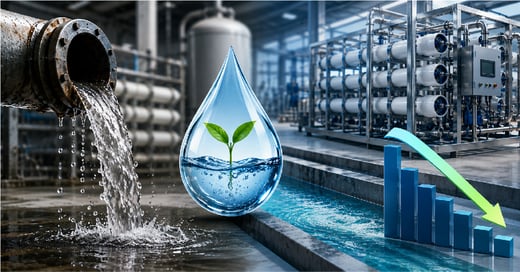
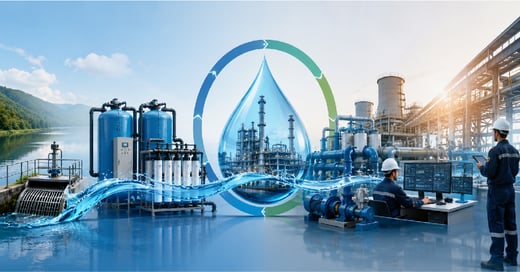
At a sprawling cement manufacturing unit in Andhra Pradesh, rising landfill costs and increasing pressure from environmental auditors forced the management to reassess its approach to waste. The answer came in the form of Ion Exchange’s advanced Waste Treatment Plant (WTP), which not only reduced hazardous waste volume by 45% but also recovered reusable minerals from the sludge, feeding them back into the raw mix process. Compliance improved, ESG ratings surged, and the plant unlocked ₹30 lakhs in annual value recovery.
In India’s resource-intensive industries, waste treatment is no longer a backend activity; it’s a frontline metric of efficiency and responsibility.
The New Industrial Mandate: Waste Minimization and Circularity
Heavy industries such as mining, steel, petrochemical, cement, and fertilizer operate under intense regulatory and environmental scrutiny. With the National Action Plan for Climate Change (NAPCC), ESG frameworks, and SPCB clearances evolving, these sectors need proactive waste treatment strategies that prioritize recovery, reduction, and reuse.
Ion Exchange’s advanced WTPs offer a structured, engineered path toward zero-waste operations without compromising productivity.
Industry-Wise Waste Treatment Demands & Solutions
- Challenge: Heavy metal-laden slurry, tailings, high TSS
- WTP Solution: Multi-stage sedimentation, chemical precipitation, and sludge dewatering
- Outcome: Treated water fit for dust suppression or greenbelt irrigation; safe disposal of stabilized sludge
- Challenge: Complex effluent with oils, phenols, COD, and volatiles
- WTP Solution: Oil-water separation, advanced oxidation, bio-polishing, ZLD
- Outcome: Discharge-free operation, reduced freshwater dependency
- Challenge: Pickling waste, oily mill scale, high-metal sludge
- WTP Solution: pH correction, chemical neutralization, solid-liquid separation
- Outcome: Iron sludge recovered for sinter plant; reduced hazardous waste liability
- Challenge: High suspended solids, particulate-heavy runoff, and kiln wash
- WTP Solution: Lamella clarifiers, recirculation loops, filter press
- Outcome: Up to 90% water reuse in cooling and process streams
5. Fertilizer
- Challenge: Nutrient-rich liquid waste, ammonia, nitrate, phosphate contamination
- WTP Solution: Biological treatment + NF membrane + stripping columns
- Outcome: Treated water reused; recovered ammonia sold as by-product
Ion Exchange Innovations: What Makes Our WTPs Different?
- Sludge Volume Minimization: Via high-efficiency thickeners, geotubes, and chemical conditioners
- Resource Recovery: Salts, metals, acids, and energy from waste
- Smart Automation: SCADA-controlled dosing, pH balancing, and filter operation
- Energy Synergies: Integration with waste heat recovery and solar-assisted sludge drying
- Turnkey Support: Feasibility studies, pilot testing, operation & maintenance
A Compliance-Driven, Circular Future
Ion Exchange WTPs help clients:
- Comply with Schedule I waste mandates under Hazardous Waste Rules
- Achieve Zero Liquid Discharge (ZLD) goals.
- Improve ESG ratings with quantifiable waste reduction metrics.
- Access CPCB incentives for waste recovery technologies
Integration Edge: Combine with Chemical and Membrane Systems
Our WTPs achieve peak performance when coupled with:
- Advanced Chemicals: For sludge conditioning, pH control, and precipitation
- Membranes: For high-recovery filtration and reject management
Conclusion: Waste Isn’t Just a Burden. It’s a Benchmark.
For high-impact industries, efficient waste treatment is the new currency of compliance, cost control, and circularity. Ion Exchange’s WTPs are engineered to meet India’s evolving industrial challenges, transforming waste from a liability into leverage.
Ready to Turn Waste Into Worth?
Let Ion Exchange evaluate your plant’s waste footprint and design a treatment and recovery system tailored to your industry, compliance needs, and ROI goals.