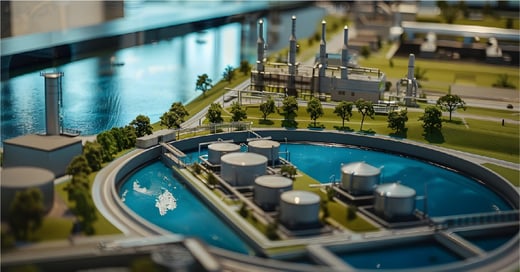
Wastewater treatment plants are increasingly expected to manage higher organic loads, tighter discharge norms, limited space, and growing reuse requirements.
Conventional biological treatment systems can struggle when mixed liquor suspended solids rise, or influent conditions fluctuate. The result may be inconsistent treated-water quality, higher operational intervention, and greater pressure on downstream treatment.
Membrane bioreactor technology offers a more reliable approach by combining biological treatment with membrane separation.
At the centre of that performance is the membrane itself.
The Challenge: High MLSS and Inconsistent Outlet Quality
High-load sewage and industrial wastewater applications require systems capable of operating under demanding biological conditions.
When conventional separation systems cannot maintain stable solids retention, plants may face:
- Variable outlet quality
- Higher suspended solids
- Poor pathogen removal
- Sludge carryover
- Larger treatment footprints
- Reduced reuse potential
- Greater operator dependency
For facilities targeting consistent discharge or reuse, these fluctuations create both compliance and operational risk.
Why Reinforced PVDF Membranes Make a Difference?
PVDF is widely used in membrane applications because of its durability, chemical resistance, and suitability for demanding wastewater environments.
A reinforced PVDF configuration adds structural strength, helping the membrane maintain stable performance during continuous operation.
HYDRAMEM MBR 40 PVDF Membranes are designed with:
- 40 m² active surface area
- 0.04 µm pore size
- Reinforced PVDF construction
- High-MLSS operating capability
- Consistent membrane separation
These characteristics support reliable solids retention and treated-water quality comparable to an ultrafiltration spectrum.
HYDRAMEM MBR 40 PVDF Membranes
HYDRAMEM MBR 40 PVDF Membranes are engineered for sewage and difficult-to-treat wastewater applications where compact design, durability, and reliable effluent quality are essential.
The membrane supports:
- High-MLSS biological operation
- Consistent outlet quality
- Pathogen-free discharge
- Wastewater reuse
- Robust long-term operation
- Reduced dependence on conventional secondary clarification
By integrating biological treatment and membrane filtration, the system can deliver stable performance even where influent conditions vary.
Where the Technology Adds Value
HYDRAMEM MBR 40 PVDF Membranes are suitable for applications including:
- Hospitals
- IT parks
- Townships
- Industrial effluent-treatment plants
- Commercial hubs
- Municipal projects
These facilities often need compact treatment systems capable of producing consistently high-quality effluent for discharge or reuse.
The Business Impact
Better membrane performance improves more than outlet-water quality.
It can support:
- Reduced treatment footprint
- Greater water-reuse potential
- Lower compliance risk
- Stable plant operation
- Better asset utilization
- Improved treatment reliability
- Easier capacity planning
Consistent effluent quality also reduces the burden on polishing and downstream reuse systems.
Why Membrane Selection Matters?
Not all MBR membranes perform equally under high solids loading.
Selection should consider:
- MLSS concentration
- Wastewater characteristics
- Required outlet quality
- Membrane surface area
- Pore size
- Chemical compatibility
- Cleaning requirements
- Expected reuse application
Choosing the right membrane is critical to maintaining stable long-term performance.
Conclusion
High-load wastewater treatment demands more than biological treatment alone.
It requires membrane technology capable of handling demanding operating conditions while maintaining consistent outlet quality.
With reinforced PVDF construction, 40 m² surface area, and a 0.04 µm pore size, HYDRAMEM MBR 40 PVDF Membranes help facilities achieve durable, compact, and reliable wastewater treatment.
Is variable effluent quality limiting your wastewater-reuse goals?
Read the full blog to understand how HYDRAMEM MBR 40 PVDF Membranes support high-MLSS operation, pathogen-free discharge, and consistent treatment performance.