What happens when brine impurities start affecting membrane cell performance?
In chlor-alkali manufacturing, brine purity is essential for efficient and reliable electrolysis. Even small concentrations of calcium, magnesium, barium, strontium, and other metallic ions can create operational challenges when they enter sensitive membrane cell systems.
Ion Exchange's INDION BSRM resins are designed for high-purity brine purification, helping chlor-alkali manufacturers protect membrane cell electrolysers, reduce maintenance-related interruptions and maintain consistent plant performance.
For industries where production continuity and membrane protection are critical, effective brine purification is essential to operational reliability.
Why Brine Purity Matters in Chlor-Alkali Production?
The chlor-alkali process uses electrolysis of purified brine to manufacture chlorine, caustic soda and hydrogen.
Membrane cell electrolysers require brine that meets stringent purity specifications. Metallic impurities entering the electrolysis system can affect membrane performance and contribute to operational inefficiencies.
Common impurities requiring attention include:
- Calcium (Ca): Can contribute to deposits and interfere with membrane performance.
- Magnesium (Mg): Can form precipitates that affect membrane operation.
- Barium (Ba): Requires effective removal to meet stringent brine purity requirements.
- Strontium (Sr): Another metallic impurity that must be controlled in membrane-grade brine.
Maintaining low concentrations of these impurities helps protect critical electrolysis equipment.
How Metallic Impurities Affect Membrane Cell Performance?
When brine purification is inadequate, residual metallic ions can create problems inside membrane cell electrolysers.
These may include increased membrane resistance, reduced operating efficiency, and additional maintenance requirements.
Over time, impurity-related deposits can affect membrane condition and increase the risk of unplanned interruptions.
For chlor-alkali manufacturers, the resulting impact can extend beyond membrane maintenance to production reliability and operating expenditure.
How INDION BSRM Resins Support High-Purity Brine Purification?
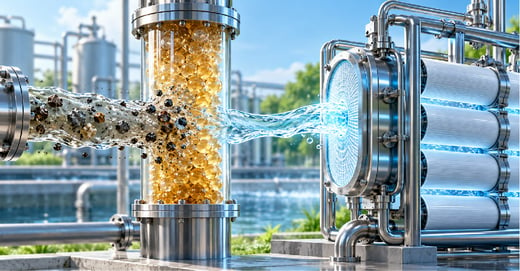
INDION BSRM is an ion exchange resin solution developed for removing metallic impurities from brine.
It helps remove calcium, magnesium, barium, strontium, and other metallic ions, supporting the production of high-purity brine suitable for downstream membrane cell operations.
By reducing residual metallic impurities, INDION BSRM helps plants maintain the brine quality required for efficient chlor-alkali production.
Key Benefits of INDION BSRM Resins
1. Protection for Membrane Cell Electrolysers
High-purity brine helps reduce impurity-related risks to sensitive membrane cell components.
INDION BSRM supports membrane protection by removing metallic ions before the brine enters the electrolysis stage.
2. Improved Brine Purification
INDION BSRM targets residual metallic impurities that must be controlled to meet stringent membrane-grade brine specifications.
This supports more consistent feed quality for chlor-alkali operations.
3. Reduced Maintenance-Related Downtime
Impurity-related deposits can lead to additional cleaning, maintenance, and operational interruptions.
Effective brine purification helps reduce these risks and supports more reliable plant operation.
4. Optimized Chlor-Alkali Performance
Consistent brine quality is essential for maintaining efficient membrane cell operation.
By supporting high-purity brine production, INDION BSRM helps manufacturers maintain dependable chlor-alkali processing conditions.
5. Lower Long-Term Maintenance Costs
Membrane cell maintenance and replacement can represent significant operational expenses.
Reducing exposure to harmful metallic impurities can help protect membrane condition and manage associated maintenance costs.
The Role of Ion Exchange Resins in Secondary Brine Purification
Chlor-alkali plants generally use multiple purification stages to prepare brine for electrolysis.
Primary brine treatment removes a substantial portion of suspended matter and hardness-forming impurities. However, residual dissolved metallic ions may remain.
Secondary brine purification uses ion exchange technology to reduce these impurities further.
INDION BSRM resins support this polishing stage by removing residual metallic ions before the purified brine reaches membrane cell electrolysers.
The effectiveness of this stage depends on appropriate resin selection, operating conditions, regeneration practices and routine monitoring.
Why Consistent Brine Quality Matters for Indian Chlor-Alkali Manufacturers?
Chlor-alkali plants in India must balance production efficiency, membrane reliability and maintenance expenditure.
As membrane cell technology depends on stringent feedwater and brine specifications, maintaining effective purification becomes essential for reliable operations.
A well-managed brine purification system helps manufacturers:
- Maintain consistent membrane-grade brine quality.
- Reduce impurity-related operational disruptions.
- Protect membrane cell electrolysers.
- Improve plant reliability.
- Manage long-term maintenance requirements.
Investing in suitable ion exchange resin technology is therefore an important part of protecting chlor-alkali production infrastructure.
INDION BSRM by Ion Exchange: Supporting Reliable Chlor-Alkali Operations
Ion Exchange offers INDION BSRM resins for high-purity brine purification in chlor-alkali applications.
Designed to remove calcium, magnesium, barium, strontium, and other metallic impurities, INDION BSRM helps protect membrane cell electrolysers and supports consistent operating performance.
For chlor-alkali manufacturers looking to improve brine purification reliability, INDION BSRM provides a targeted ion exchange solution.
Conclusion: High-Purity Brine Starts with the Right Resins
Membrane cell performance depends on more than the electrolysis equipment itself. The quality of brine entering the system plays an equally important role.
Residual metallic impurities can create operational challenges, increase maintenance requirements, and affect long-term plant reliability.
INDION BSRM from Ion Exchange helps manufacturers achieve high-purity brine, protect membrane cell electrolysers and support efficient chlor-alkali operations.
Is your brine purification system delivering the quality your membrane cells require?
Discover how INDION BSRM resins help improve brine purity and protect chlor-alkali performance.